
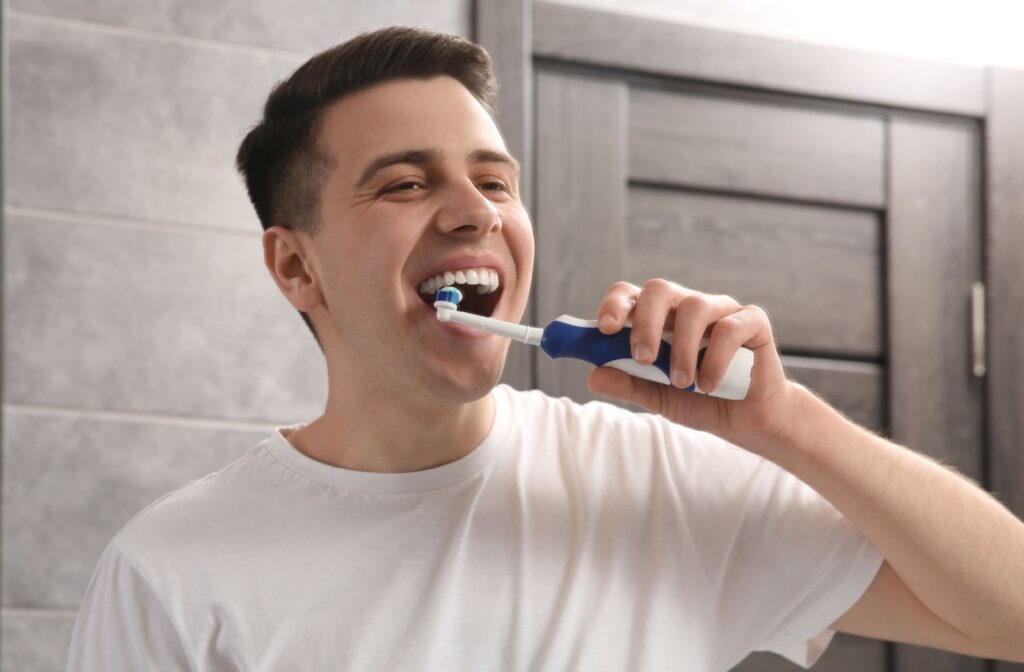
You rush through your morning routine, coffee brewing and toast browning, when you pause at the bathroom mirror. Your toothbrush sits there, and you face a daily dilemma that affects your oral health more than you might realize: when should you brush?
Ideally, you should brush your teeth before breakfast as part of your daily oral hygiene routine. This helps remove overnight bacteria and supports healthier teeth and gums before you start your day. Even without toothpaste, the physical act of brushing plays a major role in maintaining oral health.
Why Timing Matters for Your Morning Routine
Your mouth becomes a breeding ground for bacteria while you sleep. Saliva production decreases during the night, allowing harmful bacteria to multiply freely across your teeth and gums. This bacterial buildup is responsible for morning bad breath, and it forms a sticky layer of plaque on your teeth.
Brushing your teeth before breakfast eliminates this bacterial buildup, letting you start your day with a clean mouth.
The Power of the Physical Action
The mechanical action of brushing is one of the most effective ways to remove plaque and bacteria. In many cases, how you brush matters more than what you brush with. Dry brushing—brushing without toothpaste—can still be very effective at cleaning the teeth, especially first thing in the morning.
This can be a helpful option if you prefer to avoid the taste of toothpaste before breakfast or want to brush before having coffee or citrus-based drinks.
Create a Protective Barrier
Fluoride toothpaste leaves a protective coating on your teeth that helps shield tooth enamel from acid.
Boost Saliva Production
The physical act of brushing stimulates saliva production, which helps neutralize acids and wash away food particles during your meal. Increased saliva flow also aids digestion and provides natural antibacterial protection during breakfast.

What Happens When You Brush After Breakfast
Acid Softens Tooth Enamel
Many breakfast foods and drinks contain acids that temporarily soften your tooth enamel. Orange juice, coffee, and even healthy fruits can lower the pH in your mouth, making your enamel more vulnerable to erosion.
When you brush immediately after consuming acidic foods, your softened enamel is vulnerable, so brushing may actually do more harm than good.
Common Breakfast Foods That Affect Your Teeth
- Orange juice & citrus fruits that contain natural acids
- Coffee that creates an acidic environment in your mouth
- Toast & pastries with sugars that feed oral bacteria
- Dried fruits that stick to teeth and contain concentrated sugars
Why Waiting Protects Your Enamel
If you choose to brush after breakfast, waiting 30 to 60 minutes allows your saliva to neutralize acids naturally. Your mouth’s pH returns to normal levels, and your enamel has time to reharden. Consider rinsing your mouth with water after eating to help dilute any acids.
Consistency Is Key
Consistency matters more than perfection. Whether you dry brush or use toothpaste, maintaining a routine you can stick to every day is what truly supports long-term oral health. Daily oral care habits form the foundation of long-term dental health.
Schedule a consultation with us if you experience persistent morning sensitivity, notice changes in your teeth, or have questions about the optimal oral care routine for your specific needs. Professional guidance helps you make informed decisions about your dental health.
Our team at Kensington Dental Care can evaluate your current routine and provide recommendations that fit your lifestyle while protecting your natural teeth. Contact us to discuss how simple timing changes can improve your oral health outcomes.